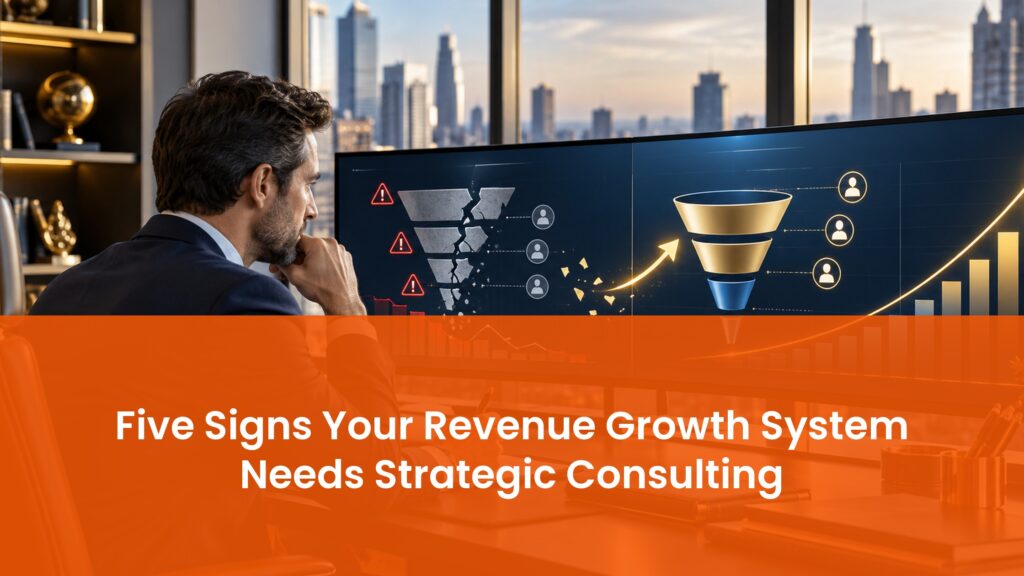
Revenue growth rarely stalls because a business lacks ideas. More often, the problem is that marketing, sales, technology and delivery are operating as separate activities rather than one connected system. Teams add campaigns, tools and channels, but the underlying friction remains.
Strategic consulting can help when internal expertise is strong but the route forward is unclear. The right advisor does not simply recommend more activity. They examine how demand is created, captured, qualified, converted and retained, then identify the constraints that matter most.
1. Pipeline performance is unpredictable
If one month is busy and the next is quiet, your growth may depend too heavily on referrals, founder effort or occasional campaign wins. A revenue system should create enough visibility to understand where opportunities originate and what actions influence them. Strategic support can help define a repeatable acquisition model rather than chasing short-term spikes.
2. Marketing activity is not producing sales conversations
Your team may be publishing content, running ads, sending emails and using LinkedIn without seeing a reliable increase in qualified conversations. This usually signals a problem with positioning, audience selection, offers, follow-up or channel coordination. A consultant can map the journey from first touch to booked meeting and expose where attention is being lost.
3. Your tools create work instead of removing it
CRM platforms, automation tools and AI agents should improve speed and consistency. When systems are poorly connected, however, teams duplicate data, miss follow-ups and spend time maintaining workflows nobody fully trusts. Strategic consulting can clarify what should be automated, what requires human judgment and which tools are genuinely necessary.
4. Sales and marketing use different definitions
Misalignment becomes visible when marketing celebrates lead volume while sales questions lead quality. Without shared definitions for an ideal customer, buying intent, qualification and handover, both teams optimise for different outcomes. An external perspective can facilitate agreement and translate it into practical operating rules, dashboards and service-level expectations.
5. Growth decisions are driven by urgency
When every new tactic feels urgent, resources become scattered. The team launches initiatives without clear hypotheses, ownership or success criteria. Strategic consulting creates a decision framework: which market to prioritise, which offer to lead with, which channels to use and which metrics indicate progress.
What useful consulting should deliver
A productive engagement should leave you with more than a presentation. It should produce a clear diagnosis, an ordered roadmap and a practical operating model your team can execute. That may include refined positioning, funnel architecture, CRM stages, nurture workflows, reporting and a plan for responsible automation.
The objective is not to outsource every growth decision. It is to make better decisions faster, align the people responsible for execution and build a system that can be measured and improved.
If these signs are familiar, a focused strategic review can identify the most valuable next move without adding unnecessary complexity.
Timing also matters. Strategic input is especially useful before a major technology purchase, market expansion, service launch or team restructure. Reviewing the commercial system first can prevent new investment from reinforcing old problems. It gives leadership a shared view of the priorities, dependencies and capabilities required for execution.

